.png)
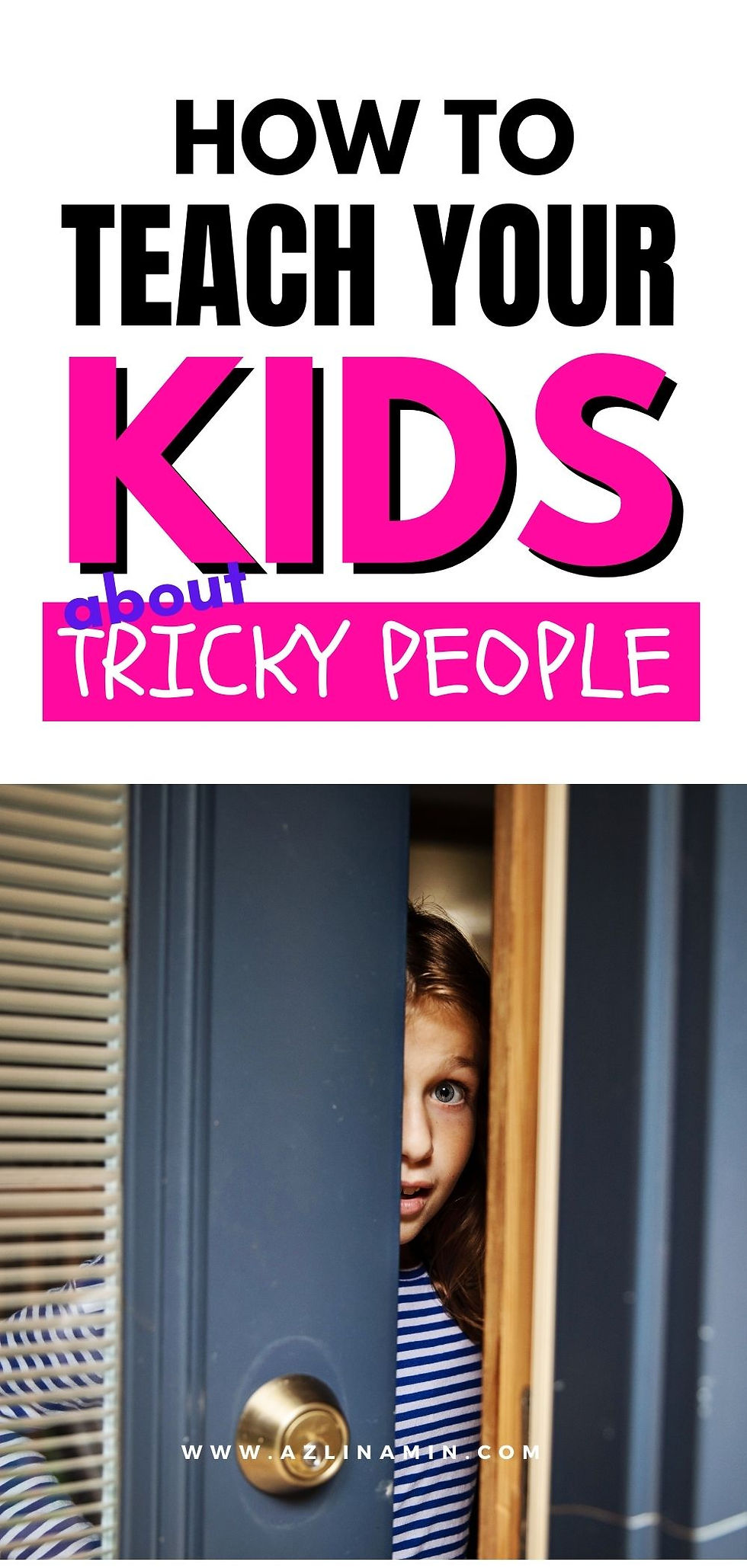
HOW TO TEACH YOUR KIDS ABOUT "TRICKY PEOPLE"
- Sep 2, 2025
- 4 min read
Updated: Dec 13, 2025

That old rule about not talking to strangers? I never used it. Because most strangers aren't actually dangerous.
And if you've ever been lost as a kid, sometimes a stranger is the exact person you need to ask for help. SO telling my son "all strangers are bad" just doesn't work. What I do instead is talk about "tricky people". Because tricky people aren't always strangers. They can be a neighbor, a cousin, or even someone your kid already knows.
It's not so much about who the person is. It's about what they do.
If your kids take any form of public transport, they end up with a lot of real-life situations where tricky-peple skills matter. Maybe somebody standing a bit too close to them, someone trying to start a strange conversation, or a moment that gave off the wrong vibe.
Teaching your kids about tricky people helps give them some sense of control whenever they're out on their own.
Safe people respect rules. Tricky people try to break them. Safe people don't ask kids to keep secrets. Tricky people do. Safe people don't need a kid's help with grown-up problems. Tricky people will try.
This in itself is a huge shift. It's not just theory. It's tools they can really use. Watching what people do, listening to their own gut, and running straight to you the second something doesn't feel right.
Here's how I taught my kid, and how you can teach your kids about tricky people too.
5 Ways To Teach Your Kids About "Tricky People"
So how do you actually explain tricky people to your kids without freaking them out? Well, it's not going to be a one-time sit-down talk.
It'll be little bite-sized lessons, said over and over, in everyday moments. In the car. At the playground. Even while they're waiting for dinner to be ready. The more normal we make it, the more it sticks.
These are the five things you can teach your kids about tricky people. Simple, clear, and easy enough for them to actually use in real life.
Forget stranger danger and talk about behavior instead
If my kid ever gets lost in a mall or a crowded place, I'd want him to talk to a stranger. A cashier. A mom with her kids. Someone who can actually help.
So I don't want them thinking "all strangers are dangerous". That's not real life. Instead, tell them that most people are fine. What matters is how they behave.
Safe people follow rules. Tricky people try to bend them.
So if someone asks them to leave with them or do something sneaky, it's not about being a stranger or not. It's about the fact that they're breaking a rule. That's the red flag.
Looks don't matter, actions do
The truth is, tricky people don't look scary. They don't come with a flashing sign that says, "danger". Sometimes they're friendly. They smile. They act helpful. They might even be someone you know.
So you can tell your kids straight up, "Don't judge by how someone looks. Pay attention to what they ask you to do." If they're asking them to keep a secret that feels uncomfortable, wanting to be alone with them, or telling them to ignore family rules. That's a problem.
Play pretend. Say, "Pretend I'm a grown-up asking you to help me hide something from Dad". Then they get to practice saying no. Role-play with different situations. It makes the lesson stick without you having to give scary lectures.
Give them one easy line to use
Kids freeze when they don't know what to say. So keep it simple. They only need one line:
"I need to check with my mom/dad first".
That's it. And then walk away.
Safe adults will totally be okay with that. If someone pushes, that's a big sign they're not safe.
Practice this with them all the time. In the car, at the store, or at the playground. You can pretend to be a stranger asking them to help find their cat. Your kids can practice saying the line and walking away.
Teach them the difference between a surprise, a secret, and privacy
Kids need this broken down clearly.
Surprises are fun. Like a birthday gift. We keep it quiet for a little while, then everyone finds out.
Secrets are not okay. Tell them that if someone asks them to hide something, especially if it makes their stomach feel weird, then that's not safe.
And there's privacy. Which is about respect. Knocking before going into someone's room. Keeping body stuff private. Privacy is healthy.
Tell your kids, "We do surprises, not secrets". That way, if anyone ever says to them, "This is our little secret", your kids already know, that's a no.
Their gut and instinct is their best safety tool
I used to tell my son they his body is way smarter than he thinks.
If his stomach feels weird, or his chest suddenly feels tight, or if they just get this urge to leave in any situation, that's enough. The same can be for your kids too.
They don't need a reason that makes sense to anybody else. They don't need to be able to explain it to you or anyone else. They can just say, "This doesn't feel right".
And if my son says that, I'm on his side every single time. No questions asked. Because I don't ever want him to think that being polite is more important than being safe.
If he says no to someone, even a friend, if he walks away, if he shuts something down, I'll be proud of him. Proud that he trusted himself.
Teaching your kids about tricky people doesn't necessarily have to be heavy or scary. It can be a bunch of little conversations, squeezed into your everyday life. While brushing teeth. At bedtime.
It's not about making them paranoid. It's about giving them the tools they need. Simple words. Clear rules. And the confidence that they can always come to you.
Two things you might want your kids to know are that their instincts are worth listening to and that you'll always believe them and back them up.
If you enjoyed this post, I'd love it if you shared it on Pinterest! Thanks!